

A substance being sold under the name “cat’s claw” is raising serious concerns among public health officials after reports of overdoses and deaths linked to products marketed as herbal supplements.
Although cat’s claw has traditionally been used as a natural herbal remedy, recent investigations have found that some products sold under this name contain powerful, undisclosed opioid compounds. These substances can cause physical dependence, withdrawal, and potentially fatal overdoses.
In October 2026, the Utah Department of Health and Human Services reported four deaths associated with dangerous compounds found in certain cat’s claw and kratom products (Utah Department of Health and Human Services [UDHHS], 2026).
Understanding what these products contain, how they affect the body, and why they can be dangerous is important for anyone considering using them.
What Is Cat’s Claw?
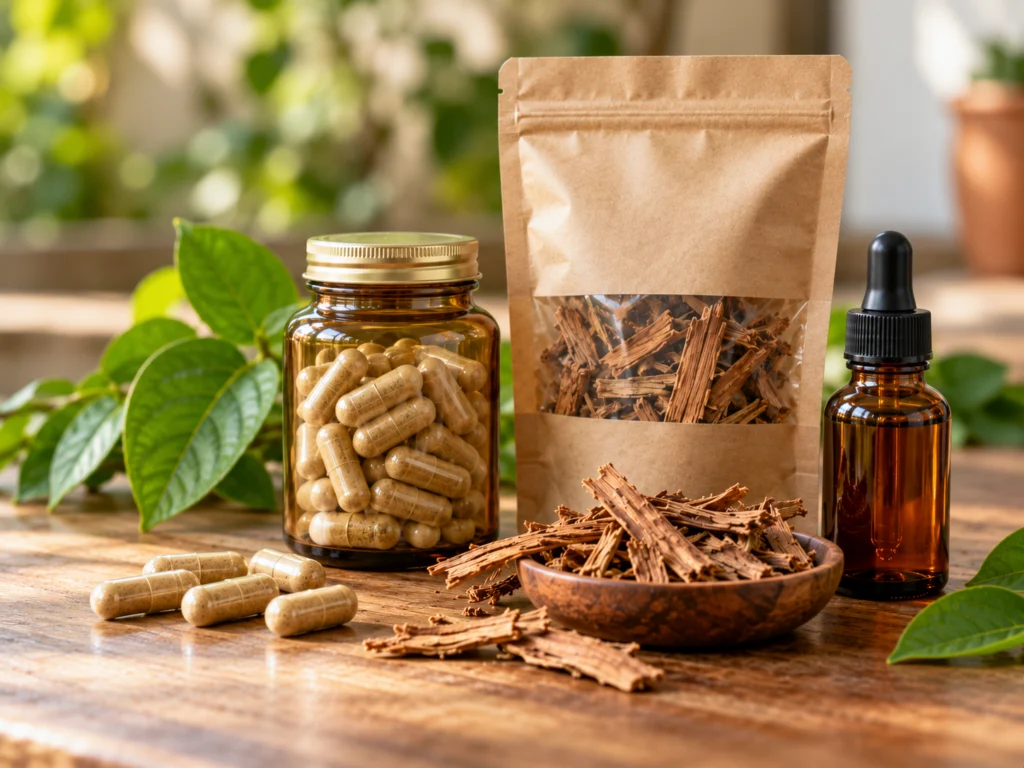
Cat’s claw, scientifically known as Uncaria tomentosa, is a tropical vine native to Central and South America. It has been used for centuries in traditional herbal medicine and is commonly marketed as a dietary supplement.
According to the National Center for Complementary and Integrative Health (NCCIH), cat’s claw has been promoted for conditions such as arthritis and inflammation, although there is insufficient high-quality scientific evidence to support its effectiveness for treating health conditions (NCCIH, n.d.).
However, the recent public health warnings are not primarily about the natural plant itself. Instead, officials have identified products labeled as “cat’s claw” that contain potent opioid compounds not disclosed on their packaging.
Some of these products are sold in smoke shops, gas stations, and online under names such as “Buzzers.” Although marketed as herbal products, laboratory testing has identified dangerous substances, including:
- Mitragynine pseudoindoxyl (MGPI): A potent opioid-related compound derived from kratom alkaloid chemistry.
- MGM-15: A semi-synthetic kratom-related opioid compound with powerful effects on opioid receptors.
These substances can produce opioid-like effects and carry significant risks of dependence and overdose (UDHHS, 2026).
Why Is the Cat’s Claw Drug Dangerous?
The biggest concern surrounding these products is that consumers may not know what they are taking.
A product marketed as natural or herbal may seem less risky than an illicit drug. However, certain cat’s claw-labeled products have been found to contain potent opioids that can affect the brain and respiratory system.
In July 2026, the Utah Poison Control Center issued an alert after receiving multiple reports of severe overdoses involving products marketed as cat’s claw or kava. Investigators suspected or identified powerful kratom-related opioid compounds that were not listed on product labels (University of Utah Health, 2026).
These products are particularly concerning for several reasons:
- Their labels may not accurately disclose their ingredients.
- Consumers may underestimate their strength because they are marketed as herbal supplements.
- The concentration and composition of active substances may vary.
- Repeated use may lead to tolerance, physical dependence, and withdrawal.
- An overdose can suppress breathing and become life-threatening.
The U.S. Food and Drug Administration (FDA) has also warned about concentrated kratom-related opioids, including 7-hydroxymitragynine (7-OH), because of their potential for misuse, dependence, and serious health consequences (FDA, 2025).
What Are the Side Effects of Cat’s Claw Drug Products?
The effects of products marketed as cat’s claw depend on their actual ingredients, concentration, and the amount consumed. Because these products may contain undisclosed opioids, they can produce effects that are very different from those associated with the natural herb.
Possible opioid-related effects include:
- Drowsiness and excessive sedation
- Dizziness and impaired coordination
- Nausea and vomiting
- Confusion and impaired judgment
- Pinpoint pupils
- Slowed or shallow breathing
- Loss of consciousness
In severe cases, these substances can cause respiratory depression, a dangerous condition in which breathing becomes too slow or stops entirely.
The Centers for Disease Control and Prevention (CDC) identifies respiratory depression as one of the most serious consequences of opioid overdose because it can lead to permanent brain injury or death (CDC, 2024).
Because research on these emerging compounds remains limited, their full range of short-term and long-term health effects is not yet understood.
Can You Become Addicted to Cat’s Claw?
Yes. Products sold as cat’s claw that contain potent opioid compounds can lead to physical dependence and addiction. This is different from natural cat’s claw, which is not established as an addictive opioid substance.
Opioids interact with receptors in the brain involved in pain, reward, and other bodily functions. Repeated exposure can cause the body to adapt to the substance, potentially resulting in tolerance and physical dependence.
Tolerance occurs when someone needs increasing amounts of a substance to achieve the same effects. Physical dependence means the body has adapted to the substance and may experience withdrawal symptoms when use is reduced or stopped.
Addiction, clinically referred to as a substance use disorder, involves continued use despite harmful consequences and difficulty controlling substance use.
Potential withdrawal symptoms from opioid-containing products may include anxiety, restlessness, sweating, nausea, diarrhea, muscle aches, and difficulty sleeping.
Utah health officials have specifically warned that the opioid compounds identified in certain cat’s claw products can cause dangerous withdrawal symptoms and addiction (UDHHS, 2026).
People experiencing dependence should seek medical guidance rather than attempting to manage severe withdrawal symptoms alone.
For additional information about related substances, read Cedar Recovery’s opioid addiction education and resources.
What Are the Signs of a Cat’s Claw Overdose?
An overdose involving opioid-containing cat’s claw products can be life-threatening. Recognizing the warning signs and responding quickly may save someone’s life.
According to the CDC (2024), signs of an opioid overdose include:
- Unresponsiveness or inability to wake someone
- Very slow, shallow, or stopped breathing
- Gurgling, choking, or unusual snoring sounds
- Blue, gray, or discolored lips and fingernails
- Extremely small, pinpoint pupils
If you suspect an overdose, call 911 immediately and administer naloxone (Narcan) if available.
Naloxone is a medication that can reverse the effects of an opioid overdose. Utah health officials have confirmed that naloxone can be effective against the opioid compounds identified in these products (UDHHS, 2026).
Additional doses may be needed, and emergency medical attention is still essential even if the person begins breathing normally.
Learn more about recognizing the signs of an overdose and how you can help.
Is Cat’s Claw Legal?
The legal status depends on whether the product contains the natural herb or controlled opioid compounds.
Natural cat’s claw is commonly sold as an herbal supplement. However, certain products marketed under that name have been found to contain substances regulated as controlled drugs.
In August 2026, the Drug Enforcement Administration temporarily placed MGPI, MGM-15, and MGM-16 into Schedule I under federal controlled substance regulations. These compounds have no currently accepted medical use in treatment in the United States and present substantial abuse concerns (FDA, 2026).
Importantly, a product being sold openly at a store or online does not necessarily mean its ingredients are legal or safe.
Consumers should be especially cautious of products claiming to be natural or legal while advertising strong psychoactive effects.
How Can Cedar Recovery Help?
If you or someone you love is struggling with dependence on cat’s claw products containing opioids, help is available.
At Cedar Recovery, we provide evidence-based opioid addiction treatment designed to address both the physical and psychological aspects of substance use. Our individualized approach combines Medication-Assisted Treatment (MAT), behavioral therapy, and ongoing recovery support. Medications such as buprenorphine and methadone may be appropriate for certain opioid-related dependencies following a medical assessment. While treatment for emerging synthetic opioid compounds requires individualized evaluation, our team can help determine the appropriate next steps or connect you with additional care when needed.
You do not have to navigate addiction alone. Call Cedar Recovery at 1-800-799-1450 or visit www.CedarRecovery.com to learn more about your treatment options.
Addiction Treatment That Works®
References
Centers for Disease Control and Prevention. (2024, April 2). What to do if you think someone is overdosing. https://www.cdc.gov/stop-overdose/response/index.html
National Center for Complementary and Integrative Health. (n.d.). Cat’s claw. National Institutes of Health. https://www.nccih.nih.gov/health/cats-claw
U.S. Food and Drug Administration. (2025, July 15). FDA issues warning letters to firms marketing products containing 7-hydroxymitragynine. https://www.fda.gov/news-events/press-announcements/fda-issues-warning-letters-firms-marketing-products-containing-7-hydroxymitragynine
U.S. Food and Drug Administration. (2026). Hiding in plain sight: 7-OH products. https://www.fda.gov/news-events/public-health-focus/hiding-plain-sight-7-oh-products
University of Utah Health, Utah Poison Control Center. (2026, July 22; updated October 5, 2026). Adulterated cat’s claw and kava products may cause opioid overdose. https://poisoncontrol.utah.edu/news/2026/07/adulterated-cats-claw-and-kava-products-may-cause-opioid-overdose
Utah Department of Health and Human Services. (2026, October 5). Utah health officials warn of fatal overdoses involving illegal “cat’s claw” and kratom product. https://dhhs.utah.gov/featured-news/utah-health-officials-warn-of-fatal-overdoses-involving-illegal-cats-claw-and-kratom-product/