
During Overdose Awareness Month, education can be lifesaving. An overdose can happen when a substance, or a combination of substances, overwhelms the body. The signs are not always obvious, and different substances can produce very different symptoms. Knowing what to look for and acting quickly can give someone a better chance of surviving an overdose and getting connected to care.
The Centers for Disease Control and Prevention (CDC) recommends treating a suspected opioid overdose as an emergency even when you are unsure. Because today’s drug supply can involve unexpected substances or combinations, it is safer to respond quickly than to wait for every sign to appear.
What Does an Overdose Look Like?
There is no single picture of an overdose. Opioids commonly slow breathing and consciousness, while stimulants can dangerously increase heart rate, blood pressure, body temperature, agitation, and other functions. Alcohol overdose can also suppress vital functions. Mixed-substance overdoses can blur these patterns, which is one reason it is important to focus on the person’s symptoms and get medical help quickly.
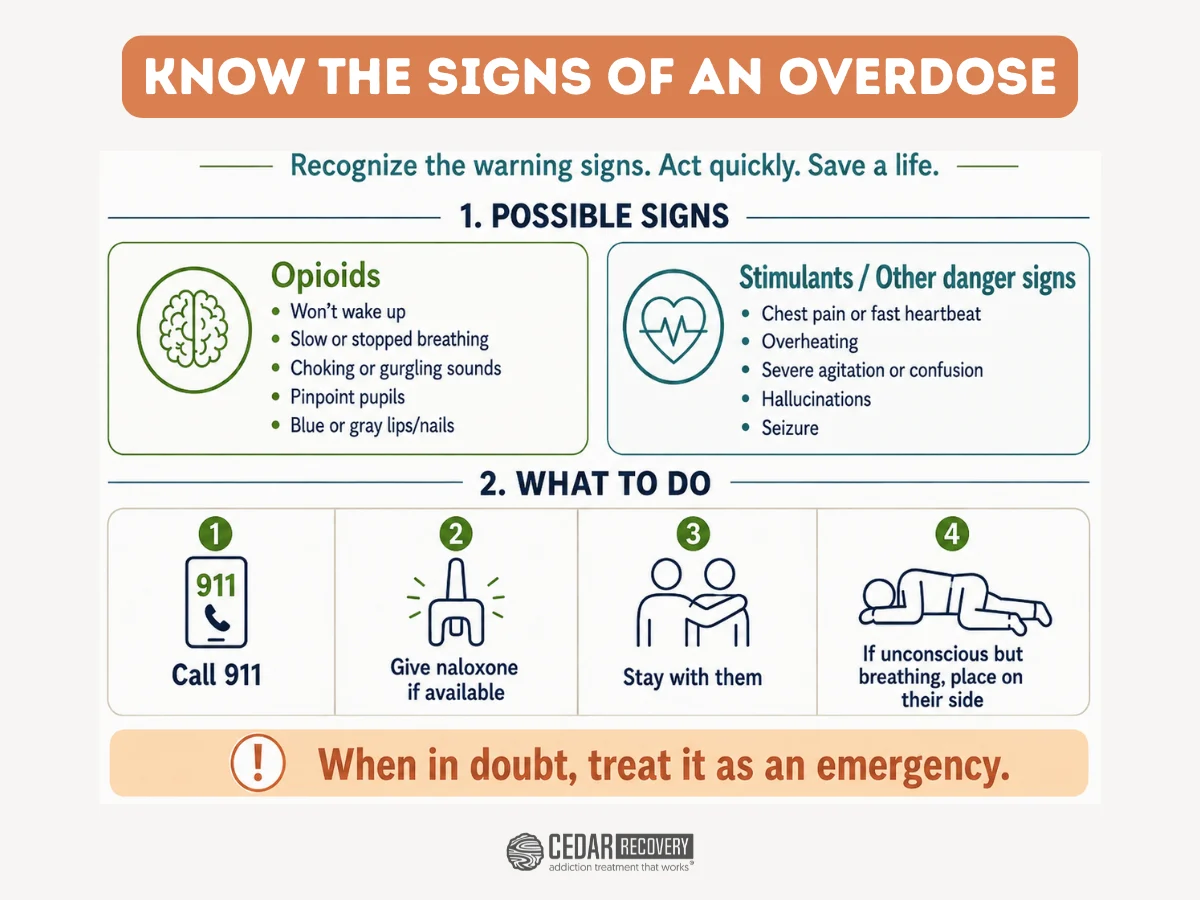
Signs of an Opioid Overdose
Opioids include fentanyl, heroin, oxycodone, hydrocodone, and other prescription or illicit opioids. In an opioid overdose, breathing can become dangerously slow or stop entirely. According to the CDC and SAMHSA, warning signs may include:
- Unconsciousness or an inability to wake the person
- Slow, shallow, irregular, or stopped breathing
- Choking, gurgling, or unusual snoring sounds from someone who cannot be awakened
- A limp body
- Small, constricted “pinpoint” pupils
- Pale, gray, blue, or otherwise discolored lips, fingertips, or skin
- Vomiting or an inability to speak or respond normally
A person experiencing an opioid overdose may look like they are sleeping. If they cannot be awakened or their breathing is not normal, do not assume they can simply “sleep it off.” Treat the situation as a medical emergency.
Signs of a Stimulant Overdose
Stimulants such as cocaine, crack cocaine, methamphetamine, and amphetamines can produce a very different emergency. The CDC Stimulant Guide notes that stimulant overdoses vary from person to person and may occur even when someone remains conscious. Signs that may require medical attention include:
- Rapid breathing, a very fast heart rate, or an irregular heartbeat
- Overheating or excessive sweating
- High blood pressure
- Chest pain or tightness
- Dilated pupils, dizziness, or tremors
- Confusion, irritability, or sudden mood changes
- Panic, extreme anxiety, paranoia, hallucinations, or psychosis
- Nausea or vomiting
- Seizures, loss of consciousness, stroke-like symptoms, or difficulty breathing
Dangerous overheating, seizures, chest pain, severe confusion, and loss of consciousness are especially concerning. Call 911 when a stimulant-related medical emergency is suspected. While waiting for help, reduce external stimulation such as loud noise or unnecessary touching, help the person avoid becoming overheated, and stay with them.
Signs of an Alcohol Overdose
Alcohol overdose, sometimes called alcohol poisoning, occurs when alcohol begins to shut down areas of the brain that control vital functions. The National Institute on Alcohol Abuse and Alcoholism (NIAAA) identifies warning signs such as:
- Mental confusion or severe disorientation
- Difficulty remaining conscious or inability to wake up
- Vomiting
- Seizures
- Slow or irregular breathing
- A slow heart rate
- Clammy, pale, or bluish skin
- An extremely low body temperature
- A dulled gag reflex, which increases the risk of choking
Do not assume an unconscious person will be safe if they are allowed to sleep. NIAAA warns that coffee, cold showers, or trying to make someone walk do not reverse an alcohol overdose and may make the situation more dangerous.
What to Do If You Suspect an Overdose
You do not have to determine exactly which substance caused the emergency before taking action. If the person is unconscious, cannot be awakened, is not breathing normally, is having a seizure, is dangerously overheated, or is experiencing severe chest pain or other life-threatening symptoms, call 911 immediately.
1. Call 911
Tell the dispatcher what you can observe, such as whether the person is responsive, how they are breathing, whether they are having a seizure, or whether they have chest pain or extreme overheating. Follow the dispatcher’s instructions while emergency medical services are on the way.
2. Give Naloxone if Opioids Could Be Involved
Naloxone is an opioid overdose reversal medication. If opioid involvement is possible, administer naloxone according to the product instructions and continue following emergency guidance. Naloxone does not reverse the effects of stimulants or alcohol. However, the CDC notes that it may still be lifesaving when an opioid is also involved, including when a substance contains an unexpected opioid.
3. Support Breathing
If the person is not breathing or is not breathing effectively, follow 911 instructions. Begin rescue breathing or CPR if you are trained and it is appropriate. If an automated external defibrillator (AED) is available, follow its instructions.
4. Place an Unconscious, Breathing Person on Their Side
If the person is unconscious but breathing, place them on their side when it can be done safely. This can help reduce the risk of choking if they vomit.
5. Stay With Them Until Help Arrives
Continue watching the person’s breathing, responsiveness, and overall condition. Do not leave someone alone during a suspected overdose, even if they appear to improve after naloxone.
6. For a Suspected Stimulant Overdose, Reduce Heat and Stimulation
The CDC recommends creating a safer, calmer environment when possible. Reduce excessive noise and unnecessary touching, monitor the person carefully, and help prevent overheating while waiting for medical personnel.
Why Naloxone Should Be Part of Overdose Preparedness
Naloxone can rapidly reverse an opioid overdose and restore breathing long enough for emergency medical care to arrive. Because fentanyl and other opioids may be present in unexpected substances, access to naloxone can be important even for people who do not intentionally use opioids. SAMHSA’s overdose prevention resources include guidance on recognizing opioid overdose and using overdose reversal medications.
Treatment Is Also Overdose Prevention
Emergency response can save a life in the moment, but preventing the next overdose also means making effective treatment easier to reach. The CDC reports that medications for opioid use disorder are associated with a reduced risk of overdose and overall mortality. FDA-approved medications for opioid use disorder include buprenorphine, methadone, and naltrexone.
At Cedar Recovery, our Medication-Assisted Treatment (MAT) programs combine evidence-based medication with behavioral health care, peer support, and recovery resources. Our goal is to treat the person, not just the addiction, and build a plan that supports long-term recovery.
Learn more about Cedar Recovery’s treatment approach and the addictions we treat.
Cedar Recovery Can Help
No one should have to wait for an overdose to become the reason they seek help. If you or someone you care about is struggling with opioid use or is worried about overdose risk, Cedar Recovery can help you understand treatment options and take the next step toward recovery.
Our teams provide compassionate, evidence-based addiction treatment designed to help people feel better, get better, and stay better. Connecting to care can help reduce overdose risk, manage cravings and withdrawal, and create the stability needed to work toward lasting recovery.
Visit cedarrecovery.com or find a Cedar Recovery location near you to learn more and get started.
References
Centers for Disease Control and Prevention. (2025, June 9). Preventing opioid overdose. https://www.cdc.gov/overdose-prevention/prevention/index.html
Centers for Disease Control and Prevention. (2022). A stimulant guide: Answers to emerging questions about stimulants in the context of the overdose epidemic in the United States. National Center for Injury Prevention and Control. https://www.cdc.gov/overdose-prevention/media/pdfs/2024/03/CDC-Stimulant-Guide.pdf
Substance Abuse and Mental Health Services Administration. (n.d.). Opioid overdose reversal medications (OORM). Retrieved August 24, 2026. https://www.samhsa.gov/substance-use/treatment/overdose-prevention/opioid-overdose-reversal
National Institute on Alcohol Abuse and Alcoholism. (n.d.). Understanding the dangers of alcohol overdose. Retrieved August 24, 2026. https://www.niaaa.nih.gov/publications/brochures-and-fact-sheets/understanding-dangers-of-alcohol-overdose
Centers for Disease Control and Prevention. (2024, April 9). Opioid use disorder: Treating. https://www.cdc.gov/overdose-prevention/hcp/clinical-care/opioid-use-disorder-treating.html